Cursor
The editor that made “AI-native IDE” a category instead of a feature.
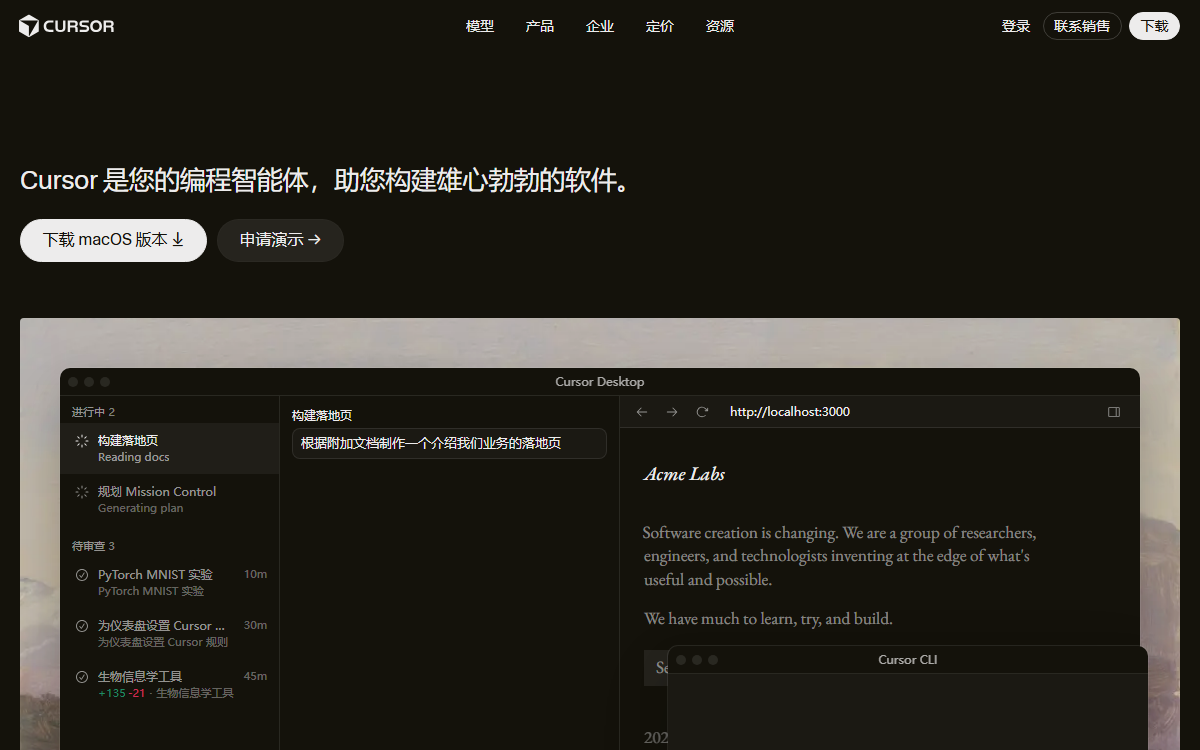
What it is
A VS Code fork that put the model inside the editing loop rather than beside it. It became the reference point every other coding agent is measured against.
Who built itCursor is built by Anysphere, incorporated in 2022 by four MIT students — Michael Truell, Sualeh Asif, Arvid Lunnemark and Aman Sanger — with Truell as CEO and Asif as chief product officer. In October 2023 the company announced an $8 million seed round led by the OpenAI Startup Fund, and its 2026 product posts still carry the names of two of the four founders. On 14 August 2026 Anysphere was acquired by SpaceX, which its own announcement framed as compute: “the largest fleet of GPUs in the world” for training stronger models.
Build log
3 stages- 01
Starting from a fork, not a blank page
The team forked VS Code so the editor, keybindings and extension ecosystem came for free. That decision is why the product felt finished on day one and why competitors shipping “AI editors” from scratch kept losing on papercuts.
- 02
Making the model read the repo, not the prompt
The real engineering was retrieval and context assembly: deciding which files, symbols and recent edits to send. The chat UI was the easy part.
- 03
Shipping the agent, then the reviews
Multi-file agent edits turned the editor into something that acts. Everything after that — diffs, checkpoints, review flows — is tooling to make acting safe.
What they would tell you
- Distribution beats novelty: an existing ecosystem is worth more than a novel UI.
- The hard part of a coding agent is context selection, not generation.
Adjacent records
All records →No. 020
Browser Use
Gives a model a browser instead of a screenshot: the page is converted to text the model can act on.
No. 018
Cline
An open-source coding agent that reads files, runs terminal commands and edits across a repository.
No. 013
OpenHands
An open-source software engineering agent that started as a tribute to Devin — and outlived the name.